
Last month, our Fulton Street Food Recovery Team rescued more than 7,092 pounds of unsold produce from Saturday markets and redistributed it to the Heartside community of Grand Rapids. That's more than 7,000 pounds of fresh fruits and vegetables that might otherwise have gone to waste, but instead found its way into the hands of community members who can put them to good use.
This brings us to an incredible milestone: 32,279 total pounds of produce donated by our farmers in 2026!
To put that number into perspective, that's over 7,000 pounds more than the total amount of produce donated throughout our 2025 Main Season, surpassing any sum totals from previous years. We're excited to see the program continue to grow, but these numbers represent something much bigger than a year-over-year increase. Each additional pound of produce adds to the amount of fresh, nutritious food that’s been made more accessible to our neighbors.
Behind every pound of produce is a farmer willing to give, a volunteer willing to lend a hand, and a community that benefits from their generosity.
Turning Unsold Produce Into Community Resources
Our farmers market brings fresh, locally grown food into our community each week. But at the end of a market day, farmers may find themselves with produce they weren't able to sell, and that might not keep until their next market day. While this food is still perfectly good to eat, farmers are often forced to toss (or, hopefully compost!) unsold produce from the week.
That's where our Food Recovery Program comes in.
Rather than allowing perfectly good produce to go unused, we work with participating farmers to collect their unsold fruits and vegetables and redistribute them to community members experiencing food insecurity.
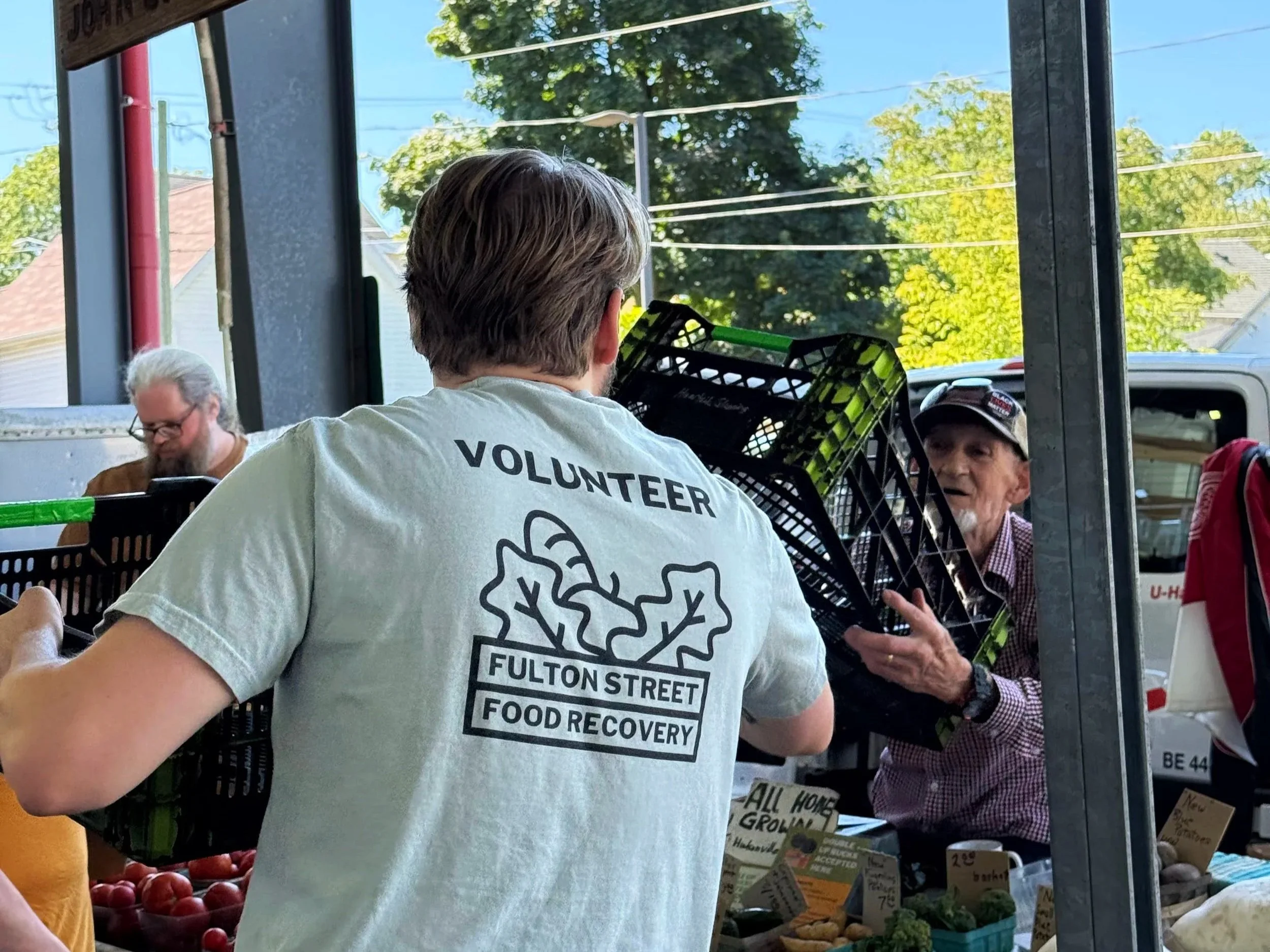
A Fulton Street Food Recovery volunteer collecting unsold produce at the end of a Saturday farmers market.
It's a simple idea with a meaningful impact: connect the abundance of our farmers market with the needs of our neighbors.
Through this program, produce that might otherwise be left behind gets a second opportunity to serve a purpose. Farmers can support their community beyond the market, food waste is reduced, and fresh food becomes more accessible to people who may face barriers to obtaining it.
What Does Food Recovery Look Like on a Saturday?
Our Food Recovery efforts happen every Saturday afternoon during the months of June through October. While market shoppers are still browsing vendor booths and farmers are wrapping up their sales, our Food Recovery staff and volunteers are getting to work.
The process begins with a walk through the market. Team members visit participating farmers to collect unsold produce that they have generously opted to donate. As produce is collected, other members of the team begin weighing and quality-checking each crate. This step helps us keep track of how much food is being donated while ensuring that the produce distributed to the community is fresh and suitable for eating.
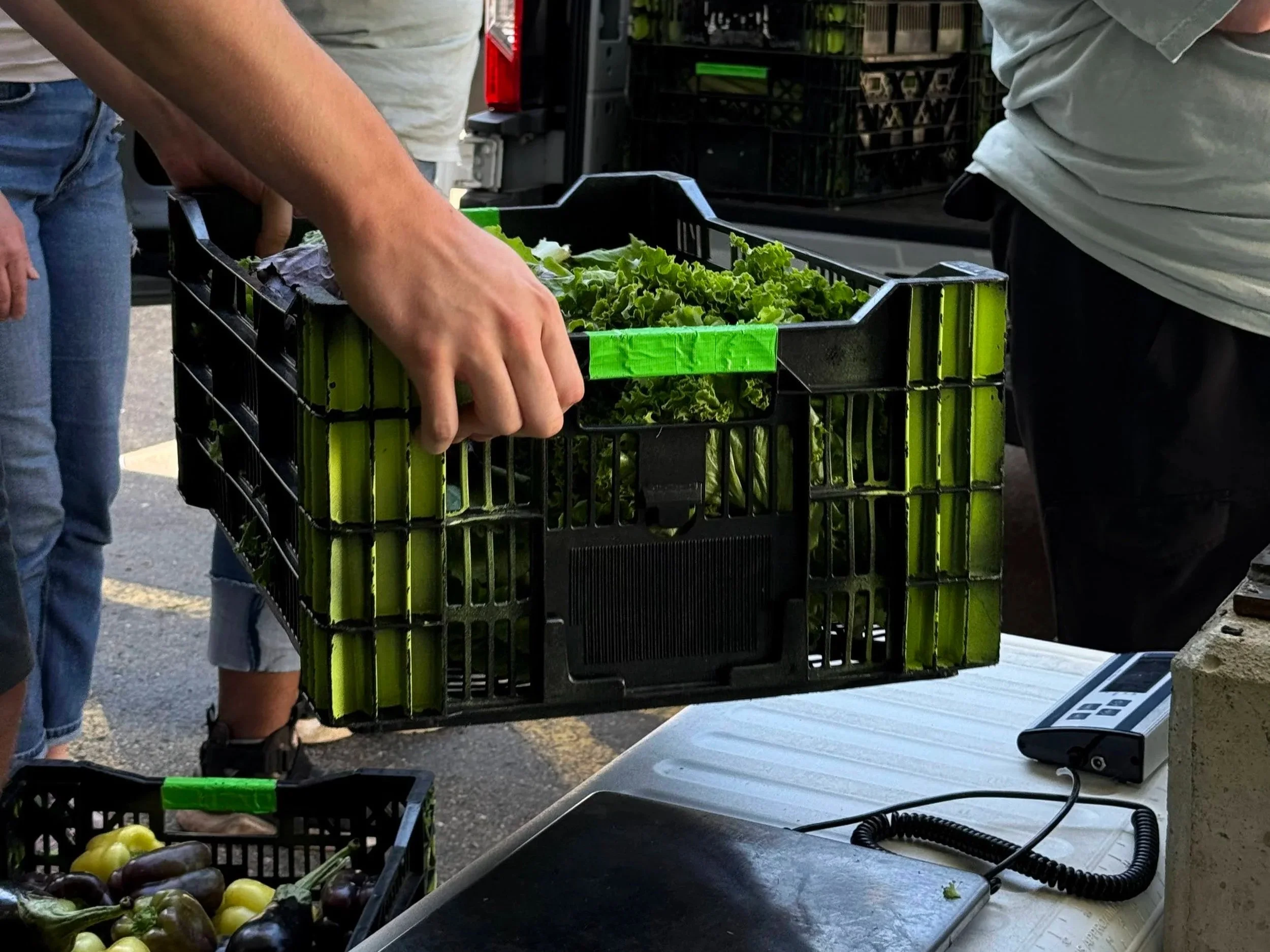
Fulton Street Food Recovery volunteers weighing donated produce during collection.
Once the collection and quality checks are complete, everything is loaded into the Food Recovery van. But the work isn't over yet!
The team then heads to the parking lot of LaGrave Avenue Christian Reformed Church, where community distribution takes place from 2:45 to 3:30 p.m.
During this time, members of the Heartside community and surrounding GR areas can stop by and receive fresh produce at no cost. There are no requirements, no questions asked, and no expectation of payment.
What may look like a relatively short distribution window is the result of hours of coordination, collection, sorting, weighing, and preparation. Every Saturday, our team works behind the scenes to make sure the food collected at the market gets where it needs to go.
The Impact Behind the Numbers
32,279 pounds is an extremely exciting number for our team to read, but the most important part of that number isn't its size. It's what that number represents.
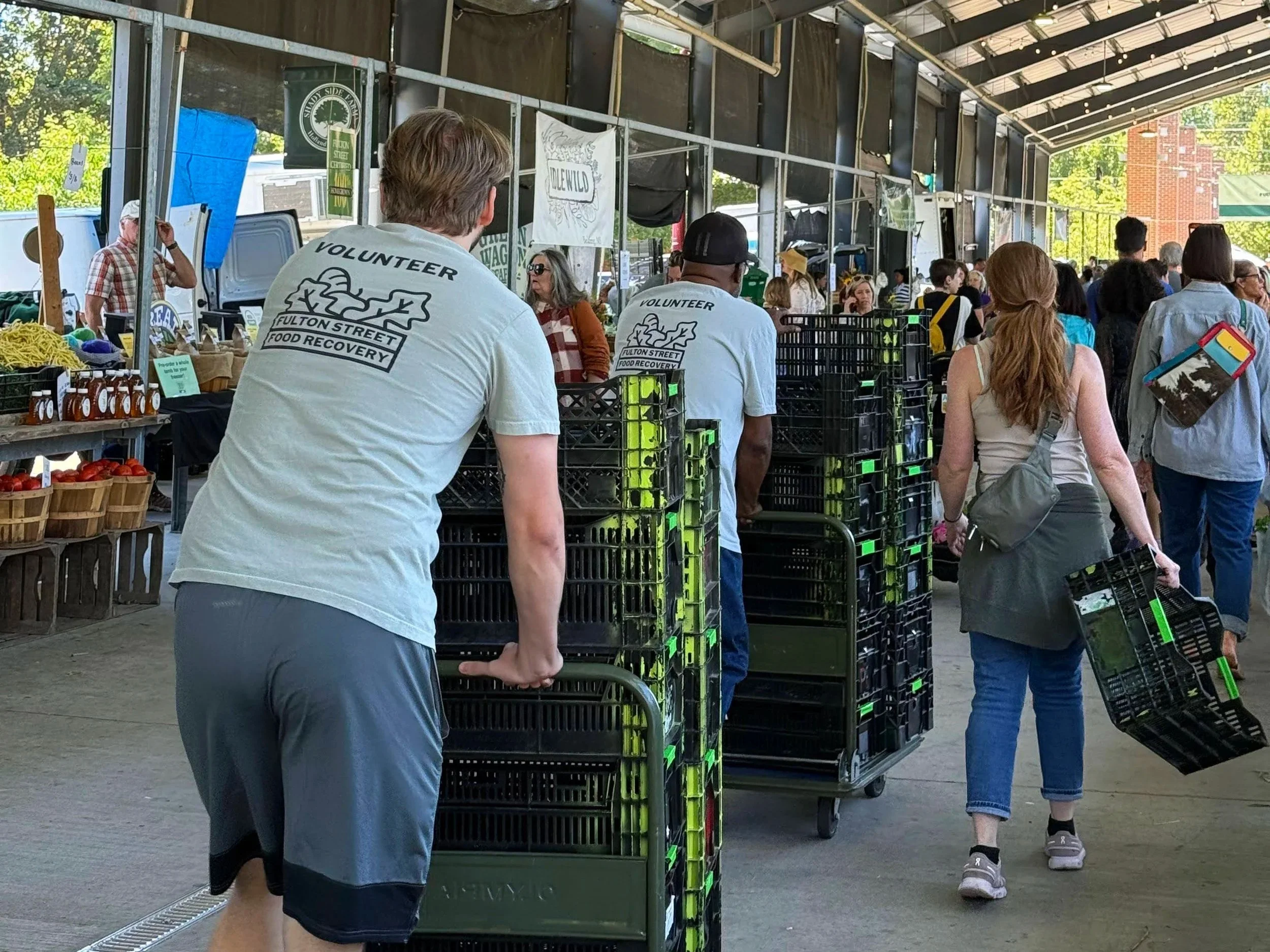
Fulton Street Food Recovery volunteers collecting produce down the market.
Every Saturday distribution is a chance to connect our farmers' generosity with the needs of our neighbors. Access to fresh produce is an important part of building a healthy, thriving community. Yet for many households, the cost of groceries, the distance to a store with a produce section, among other barriers, can make fresh fruits and vegetables difficult to obtain on a regular basis. Programs like Fulton Street Food Recovery help bridge that gap by making use of food that is already available and connecting it with people who can benefit from it.
By creating a system for collecting and redistributing these donations, we're helping ensure that more of the food our local farmers grow gets eaten and enjoyed. It's a win for our farmers, a win for our community, and a win for reducing unnecessary food waste.
A Community Effort Worth Celebrating
A program like this doesn't happen without people who care.
First and foremost, we want to extend a huge thank you to the participating farmers who generously donate their unsold produce each week. Their willingness to share what they've grown is what makes Food Recovery possible. Each donation, whether it's a few crates or a much larger contribution, helps put fresh food into the community.
We're also incredibly grateful to our Fulton Street Food Recovery staff and volunteers. From walking the market and collecting donations to weighing, quality-checking, loading, and distributing produce, their Saturday afternoons are dedicated to supporting their neighbors. Michigan summers are a luxury! We acknowledge that their time, energy, and commitment that makes it possible for this program to run week after week could be spent in a myriad of other ways.
As we reflect on another successful Main Season, we're reminded that the impact of a farmers market extends far beyond its vendor booths. It lives in the connections we build, the resources we share, and the ways we show up for one another. Our Food Recovery gets put on pause until next June, however, there are still a number of ways you can continue to support your local food system! Consider donating to our food pantry, joining our Community Supported Marketplace, and of course: we hope you feel encouraged to continue shopping from local farms and creators at our Second Season markets.
